
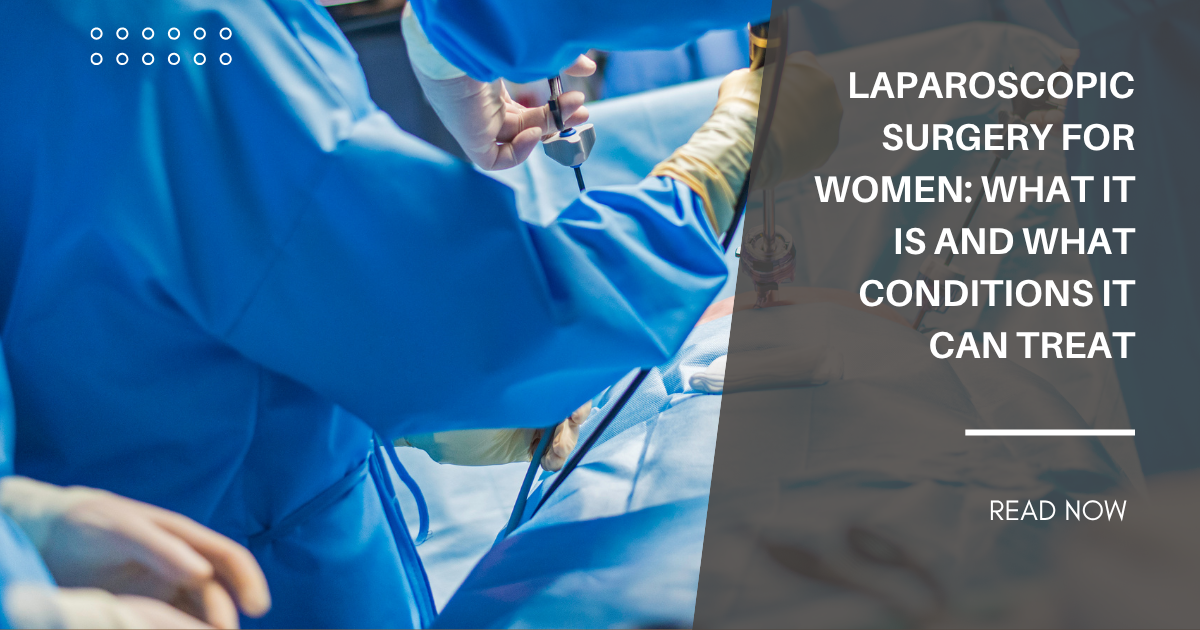
Laparoscopic Surgery for Women: What It Is and What Conditions It Can Treat
For many women, the word "surgery" brings up images of large incisions, long hospital stays, and weeks of recovery. While that may have been true in the past, advances in surgical techniques mean many gynaecological conditions today are treated through much smaller, more precise methods. Laparoscopic surgery is one such approach, and it has become a common and preferred option for a wide range of gynaecological conditions.
This blog explains what laparoscopic surgery involves, the conditions it's commonly used for, and what women can generally expect before and after the procedure.
What Laparoscopic Surgery Is, in Simple Terms
Laparoscopic surgery, often referred to as "keyhole surgery," is a technique where a surgeon operates through a few small incisions instead of one large cut. A thin tube with a camera, called a laparoscope, is inserted through one of these incisions, allowing the surgeon to view the internal organs on a screen in real time. Specialised instruments are then used through the other small incisions to carry out the procedure.
Rather than opening up the abdomen fully, this approach allows the surgeon to work with a magnified, clear view of the pelvic organs while minimising disruption to the surrounding tissue. It's a technique that has been refined over the years and is now used across many areas of gynaecological care.
Conditions Commonly Treated This Way
Laparoscopic surgery can be used to diagnose and treat a range of gynaecological conditions. Some of the more common ones include:
- Endometriosis: A condition where tissue similar to the uterine lining grows outside the uterus, sometimes causing pain and affecting fertility. Laparoscopy allows a surgeon to both identify and treat these areas in the same procedure.
- Fibroids: Non-cancerous growths in or around the uterus that can sometimes cause heavy periods, pelvic discomfort, or fertility concerns. Depending on their size and location, fibroids may be removed laparoscopically through a procedure known as a myomectomy.
- Ovarian cysts: Fluid-filled sacs that can develop on the ovaries. While many cysts resolve on their own, some may need to be surgically removed, and laparoscopy is often a suitable approach for this.
- Ectopic pregnancy: In certain situations, laparoscopic surgery may be used to manage a pregnancy that has implanted outside the uterus.
- Diagnostic evaluation: Sometimes laparoscopy is used simply to understand the cause of unexplained pelvic pain or infertility, allowing the surgeon to directly view the pelvic organs when other tests haven't provided a clear answer.
The suitability of laparoscopic surgery for any of these conditions depends on the individual's overall health, the specifics of their condition, and their surgeon's assessment.
How It Differs from Open Surgery
The most noticeable difference between laparoscopic and open surgery lies in the size of the incisions. Open surgery typically involves a single larger cut to access the abdominal or pelvic area, while laparoscopic surgery uses a few small incisions, often just large enough to fit the surgical instruments.
This difference tends to influence several aspects of the overall experience. Smaller incisions are generally associated with less scarring and may involve a shorter hospital stay compared to open surgery. However, the most appropriate approach always depends on the individual's condition, and in some cases, open surgery may still be the more suitable option. This is a decision that's made together with your gynaecologist after a thorough evaluation.
What the Procedure Involves
Laparoscopic surgery is performed under general anaesthesia, meaning the patient is fully asleep throughout the procedure and does not feel any discomfort during the surgery itself. A few small incisions are made in the abdomen, through which the laparoscope and surgical instruments are inserted. The abdomen is gently inflated with gas to create space for the surgeon to see and work more clearly.
Depending on the condition being treated, the procedure can take anywhere from under an hour to a couple of hours. Once the surgery is complete, the small incisions are closed, and the patient is moved to a recovery area to be monitored before being discharged.
Before the day of surgery, your gynaecologist will typically go through a few preparatory steps with you, which may include certain blood tests, imaging, and instructions on fasting before the procedure. These steps help ensure the surgery can be carried out safely and that any specific considerations related to your health are accounted for in advance.
Every case is different, and your gynaecologist will walk you through what to expect for your specific procedure during your pre-surgery consultation, including how long you may need to stay at the hospital afterward.
Why Laparoscopy Has Become a Preferred Approach
Over the years, laparoscopic techniques have been refined considerably, and many gynaecologists now consider them a suitable first option for a wide range of conditions that once required open surgery. Part of the reason for this shift is the ability to achieve a clear, magnified view of the pelvic organs without the need for a larger incision.
That said, it's worth remembering that laparoscopic surgery isn't automatically the right choice for every situation. Factors such as the size and location of a fibroid, the extent of endometriosis, or a patient's overall health history can all influence whether laparoscopy or an open approach is more appropriate. This is precisely why a detailed pre-surgical evaluation matters, rather than assuming one technique is universally better than the other.
Recovery and What to Expect
Recovery after laparoscopic surgery varies from person to person, and your gynaecologist will guide you based on your individual progress and the nature of the procedure performed. That said, there are some general patterns that most women can expect.
In the early stages of recovery, some mild discomfort, bloating, or shoulder pain (related to the gas used during surgery) is fairly common and usually settles on its own within a few days. Most women are encouraged to start moving around gently soon after surgery, as light activity can support the healing process, though your doctor will advise on what's appropriate for you specifically.
As healing progresses, most women are able to gradually return to their regular activities, though this timeline depends on the individual and the type of procedure performed. Strenuous activity, heavy lifting, and certain exercises are usually best avoided until your doctor confirms it's appropriate to resume them.
It's natural to have questions about when you can return to work, resume driving, or get back to your usual routine. These are all things your gynaecologist will address based on how your recovery is progressing, rather than a fixed timeline that applies to everyone.
When to See a Doctor After Surgery
While most recoveries proceed smoothly, it's helpful to know what to watch for. Signs such as fever, increasing pain rather than gradual improvement, unusual discharge from the incision sites, or heavy bleeding should be discussed with your doctor promptly. Your surgical team will typically provide specific guidance on post-operative care and follow-up appointments before you're discharged.
Laparoscopic Surgery at Dr Prabhjot Manchanda's Clinic
If you've been advised to consider laparoscopic surgery, or you're experiencing symptoms like persistent pelvic pain, heavy periods, or fertility concerns that haven't been fully explained, a gynaecological consultation can help determine the right path forward. Dr Prabhjot Manchanda is an experienced Obstetrician and Gynaecologist based in Ghatkopar, Mumbai, offering a range of laparoscopic procedures including treatment for endometriosis, fibroids, ovarian cysts, and diagnostic evaluations for unexplained pelvic symptoms.
An individual consultation can help you better understand your condition, whether laparoscopic surgery is an appropriate option for you, and what the process would involve based on your specific situation.
Frequently Asked Questions
1. Is laparoscopic surgery painful?
Most patients experience only mild discomfort during recovery, as the procedure itself is performed under general anaesthesia. Your doctor will guide you on managing any post-surgical discomfort.
2. How long does it take to recover from laparoscopic surgery?
Recovery varies from person to person depending on the procedure and individual healing. Your doctor will guide you on your specific timeline based on your progress.
3. Will I have visible scars after laparoscopic surgery?
The incisions used in laparoscopic surgery are typically small, and any resulting marks tend to be far less noticeable than those from open surgery, though this can vary by individual.
4. Can laparoscopic surgery affect fertility?
In many cases, laparoscopic surgery is actually used to help address conditions that affect fertility, such as endometriosis or fibroids. Your doctor can discuss how your specific procedure may relate to your fertility goals.
5. Is laparoscopic surgery suitable for everyone?
Suitability depends on the individual's health profile and the specific condition being treated. Your gynaecologist will assess this during your consultation and recommend the most appropriate approach.
6. What precautions should I take after the surgery?
Your doctor will explain any precautions based on your recovery, including guidance on activity levels, diet, and follow-up visits.
If you have questions about laparoscopic surgery or would like to understand whether it's an appropriate option for your condition, consider scheduling a consultation with Dr Prabhjot Manchanda in Ghatkopar, Mumbai.